

Comptroller Audit Finds City Employee Health Fund Broke, Owing $3.1 Billion

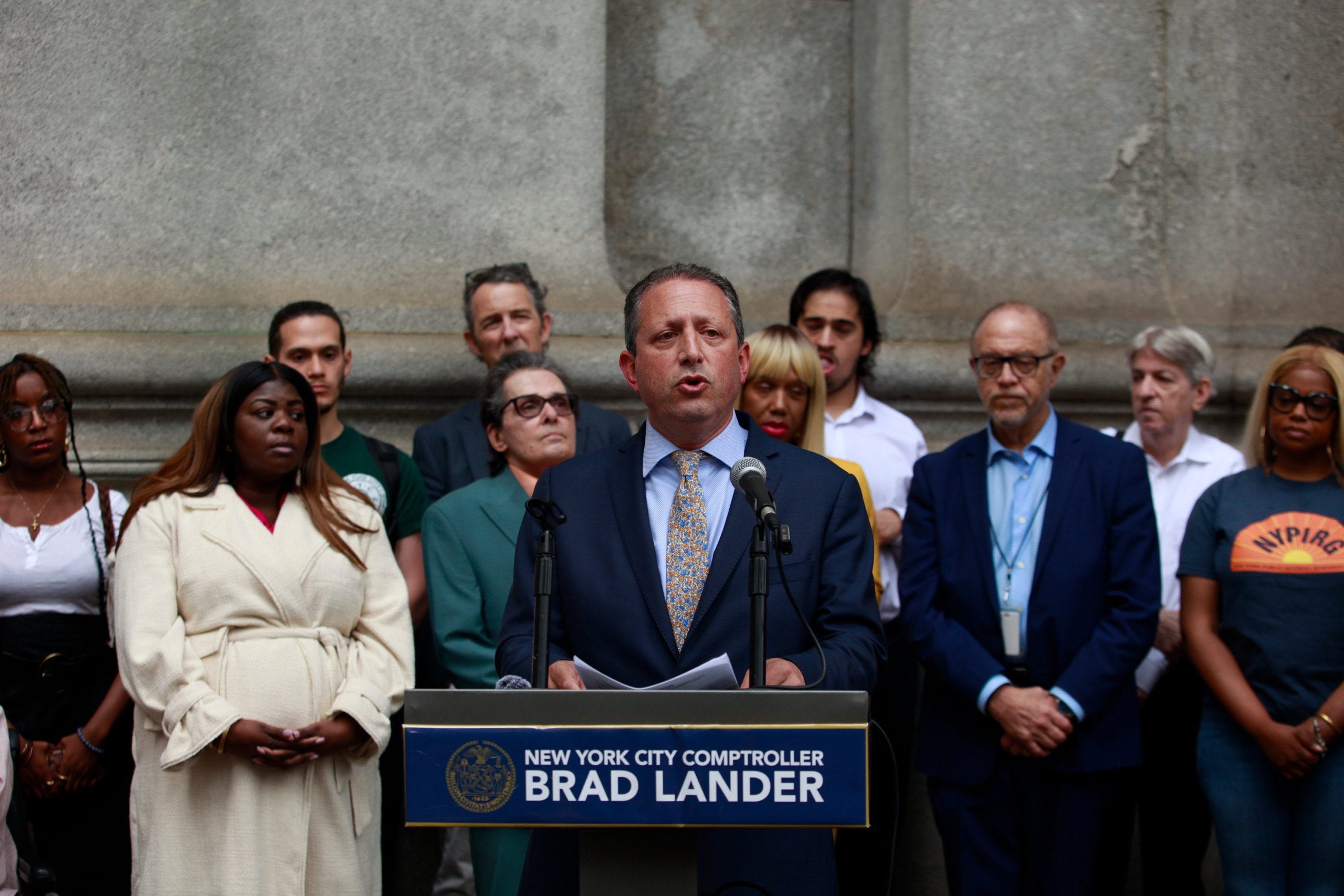
An audit by New York City Comptroller Brad Lander has determined that the Health Insurance Stabilization Fund, created to support city employee health coverage, is insolvent and billions of dollars in debt, prompting a recommendation that it be shut down altogether, a conclusion that sets off alarm bells about how municipal health benefits have been managed for decades.
The fund, jointly run by the city and the Municipal Labor Committee (MLC), owes the city $3.1 billion and holds additional untallied liabilities for fiscal years 2024 and 2025, according to the report released Tuesday. Managed through taxpayer dollars, the fund was intended to equalize premiums between major health providers for city workers, but over time has been repurposed to pay for supplemental benefits and fund labor agreements, the audit found.
“Ordinarily, the audit would propose recommendations to management to address deficiencies. However, given that [the fund] is insolvent and cannot meet its intended purpose, the audit recommends that the City work with the MLC to dissolve the Fund,” Lander wrote in his introduction. “The City should also appropriately budget for healthcare costs and benefits.”
Created in the mid-1980s, the Health Insurance Stabilization Fund was originally designed to cover cost differences between GHI and HIP health plans offered to municipal workers. A 1995 agreement clarified that if the fund ran out, the MLC would need to reduce benefits or impose payroll deductions on employees and retirees to cover any shortfall. However, the audit found that this agreement was bypassed as both the city and its public sector unions began tapping the fund for various other expenses.
From 2001 to 2024, a total of $4.3 billion was distributed from the fund in lump-sum payments to the city and union-managed general welfare funds. These included $1 billion used to support labor agreement provisions, such as avoiding layoffs and funding raises. The audit points to a pivotal moment in 2014, when Mayor Bill de Blasio struck a Healthcare Savings Agreement aimed at settling expired union contracts. That agreement resulted in a $3.3 billion reduction in the city's contributions to the fund and was part of broader efforts to lower healthcare costs.
The shift from the fund’s original purpose contributed to its financial decline, as it was also used to cover programs such as prescription drug coverage, chemotherapy, and weight loss support. The audit concluded that these expanded uses set the fund on a path to insolvency.
In response to the audit's findings, both the city's Office of Labor Relations (OLR) and the MLC denied any misuse of the fund and emphasized that all disbursements were made through collective bargaining.
“There is nothing improper about any of these uses, which were agreed to by the MLC and every individual union through the collective bargaining process,” OLR Commissioner Renee Campion wrote in a December 3 response to a draft version of the audit. “They were used to pay for essential benefits for City employees as agreed to through collective bargaining, including coverage of prescription drugs through the welfare funds, the PICA program providing lifesaving specialty drugs, averting layoffs, and funding labor agreements for the entire workforce.”
The MLC offered a similar argument in a statement attributed to its board: “The Stabilization Fund was created through collective bargaining between the City and the MLC, and never set up to operate under strict limitations of purpose. It is governed not by a single 40-year-old agreement, but by the New York City Collective Bargaining Law which empowers the MLC and the City to enter into agreements and then later modify those agreements to address changing circumstances.”
However, the comptroller’s office contested these positions, asserting that it found “no record of modifications” to the original agreement and that the city and MLC “do not sufficiently reckon with the nature of the original 1985 agreement and their mutual obligations as a result of the restricted nature of the Fund.”
The audit also linked the city’s controversial proposal to move retirees to a Medicare Advantage plan with the financial instability of the fund. While Mayor Eric Adams initially supported the switch in order to offset looming obligations, the plan was eventually abandoned after strong opposition from retirees and multiple legal challenges. Still, the report concludes that the proposal was a “direct response” to projections of the fund’s insolvency—a point not disputed by the city or the unions.
The fund’s lack of transparency and governance was also a focal point of the audit. Lander’s office identified missing records, limited financial disclosures, and inaccurate reports from the city’s labor negotiators, including instances of “false annual certifications” related to compliance with accounting standards. The audit states that "the Fund, which was established for the purpose of maintaining a reserve, has no reserves and is unable to meet its financial obligations."
Even an upcoming plan projected to generate major savings for taxpayers appears insufficient. Beginning January 1, a plan to switch active city workers to a self-insured model jointly run by EmblemHealth and UnitedHealthcare is estimated to save up to $900 million annually. However, the audit warns that this may not be enough to restore the fund’s solvency, stating the anticipated savings “would not ensure the solvency of [the fund] even if achieved.”
The report became public knowledge ahead of its release, after THE CITY obtained audio from a December 16 MLC meeting in which Henry Garrido—head of DC 37 and de facto MLC leader—criticized the audit as “outrageous,” “unprecedented,” and a “political stunt.” Garrido, who is part of Comptroller-elect Mark Levine’s transition team, sought to delay dealing with the probe findings until after Lander's departure. In a December 26 internal MLC memo, the organization expressed regret that its efforts to “correct if not defer” Lander’s “false and biased” assessment may be undermined due to the leak of the meeting recording.
Garrido could not be reached for comment regarding the report. The mayor’s office also did not respond to a request for comment. A spokesperson for Levine’s transition committee likewise did not reply.
Despite strong objections from union leadership, neither the city nor the MLC challenged the audit’s recommendation to dissolve the fund. Instead, disputes centered on whether the fund’s use had deviated from established terms.
Lander concluded the audit by asserting that top officials had known about the fund’s financial issues as far back as 2018 and had failed to take meaningful corrective action. The report marks a significant intervention by the outgoing comptroller into a contentious battle over New York City’s long-term healthcare financing and labor costs, an issue that shows no signs of fading even as new leadership takes the helm.