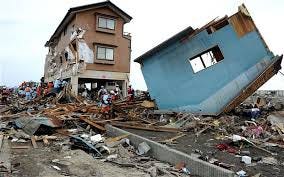
Japan on Alert as 7.6-Magnitude Earthquake Sparks First-Ever Megaquake Warning
The quake rattled Japans coastline sending Tsunami Sirens through the night

Japan has issued its highest-level earthquake alert for the first time, warning that a potentially catastrophic megaquake could strike in the days following Monday night’s 7.5-magnitude tremor that injured at least 34 people and triggered widespread tsunami warnings.
The powerful earthquake struck at around 11:15pm local time on 8 December, approximately 50 miles off the coast of Aomori Prefecture in northeastern Japan, and about 30 miles below the sea surface, according to the Japan Meteorological Agency (JMA). Severe shaking was felt across a wide area, from Hokkaido to the western Kinki region, resulting in at least 20 aftershocks by Tuesday morning, including tremors measuring 6.6 and 5.1 in magnitude.
Japan’s weather agency has now issued its first-ever top-tier alert under a system launched in 2022, warning that a megaquake — defined as a magnitude 8.0 or stronger — could occur. The advisory affects 182 municipalities along the Pacific coast from Hokkaido to Chiba Prefecture and remains in effect until 16 December.
“Due to the earthquake, the likelihood of a major earthquake occurring in the Hokkaido to the Sanriku offshore region is assessed to be higher than during normal times,” Prime Minister Sanae Takaichi said Tuesday. She added, “While fully understanding that it remains uncertain whether a major earthquake will actually occur, please take appropriate disaster-prevention measures based on the principle that you are responsible for protecting your own life.”
Authorities have urged residents to remain vigilant, check emergency evacuation routes, and secure food, water, and portable toilets. While evacuation orders were lifted by Tuesday morning, officials have not ruled out stronger aftershocks or tsunamis up to three meters high. The JMA said that though the chance of a larger earthquake is about one percent, it is significant enough to warrant public action and caution.
“This unprecedented advisory may cause confusion, but we ask everyone to calmly prepare for the possibility of another earthquake,” a Cabinet Office official said in comments reported by The Asahi Shimbun.
Chief Cabinet Secretary Kihara Minoru called on the public to rely on official information and avoid misinformation, saying it often spreads quickly in crisis situations. An emergency task force has been set up at the Prime Minister’s Office to lead the government’s response.
The earthquake led to a range of disruptions. More than 100 schools in Aomori Prefecture were closed Tuesday, and the Tohoku Shinkansen high-speed rail service was temporarily halted. Power outages were reported in some areas, and nearly 1,360 households experienced water supply disruptions. Japan Railways East said most suspended train services had resumed by Tuesday afternoon.
A total of 34 people were reported injured due to the earthquake, including 23 in Aomori Prefecture, nine in Hokkaido, and three in Iwate, according to the fire and disaster management agency. Most injuries occurred from falling objects in buildings during the quake. One person was reported in serious condition.
A man in his 40s in Hachinohe, Aomori Prefecture, told Mainichi: “I was asleep when shaking began as if I suddenly got hit from beneath. After that, shaking continued both vertically and laterally for a long time.” In Kamaishi, a 75-year-old woman said she fled to higher ground in a car driven by her daughter. “I debated whether I should leave. I was afraid of a bear popping up, my husband needs care and we have a cat,” she said.
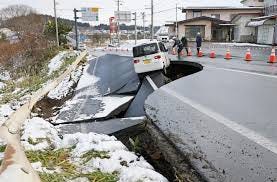
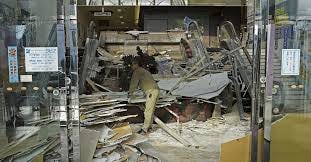
The earthquake also sparked at least one fire in Aomori City, which was extinguished later, emergency officials said. Images showed plumes of smoke and damage to both roads and commercial buildings in the affected region.
Nuclear safety is also under scrutiny. The International Atomic Energy Agency reported “no abnormalities” at the Fukushima Daiichi nuclear power plant. However, the Nuclear Regulation Authority said that about 120 gallons of water spilled from a fuel cooling system at a nuclear fuel processing plant in Aomori, close to the quake’s epicenter. Other nuclear facilities in the northeastern region are conducting urgent inspections to assess any impacts.
Prime Minister Takaichi emphasized: “We are putting people’s lives first and doing everything we can,” adding that disaster response teams had been deployed to assess damage and conduct search and rescue operations where necessary.
The warning of a possible megaquake has reignited memories of the 11 March 2011 disaster, when a magnitude 9.0 earthquake triggered a devastating tsunami and reactor meltdowns at Fukushima Daiichi, resulting in widespread radioactive contamination.
Professor Sekiya Naoya of the University of Tokyo’s Graduate School cautioned the public not to dismiss the new advisory. “If such a disaster were to strike, up to 200,000 lives could be at risk,” he said, urging residents to review and bolster their emergency preparedness. He told NHK Japan the alert should “serve as a reminder to review emergency plans and preparedness measures.”
Although no tsunami damage has been confirmed from the latest quake and all tsunami alerts were lifted early Tuesday, authorities warned people to stay alert. Tsunami waves of up to 70 centimeters were observed in several coastal communities.
Internationally, the U.S. National Tsunami Warning Center said no tsunami was expected for Alaska, British Columbia, Washington, Oregon, or California.

While day-to-day activities such as schools and public transportation are expected to continue, Japanese authorities maintain that citizens should prepare for all scenarios. The JMA has recommended that homes in regions that experienced severe shaking be inspected, noting that damage could lead to structural instability.
As aftershocks continue to ripple through the region, government officials, scientists, and residents remain braced for what could come next.