

Judge to Decide Remedies After Ruling Trump Policies Violated Student Speech Rights

A federal judge in Boston is weighing what steps to take after concluding that the Trump administration’s targeted arrests and attempted deportations of international student activists violated their free speech rights and created a broader climate of fear within academia.
The hearing on Thursday follows Judge William G. Young’s sweeping September ruling that noncitizen students have the same First Amendment rights as citizens and that the administration’s actions deliberately chilled speech critical of Israel’s conduct in Gaza.
In the case, Judge Young, who has served on the federal bench for over 40 years and is now 85, described the proceedings as “perhaps the most important” of his career. His 161-page decision found that the Trump administration had directed immigration enforcement to intimidate and silence campus activism, particularly from students criticizing U.S. foreign policy in the Middle East.
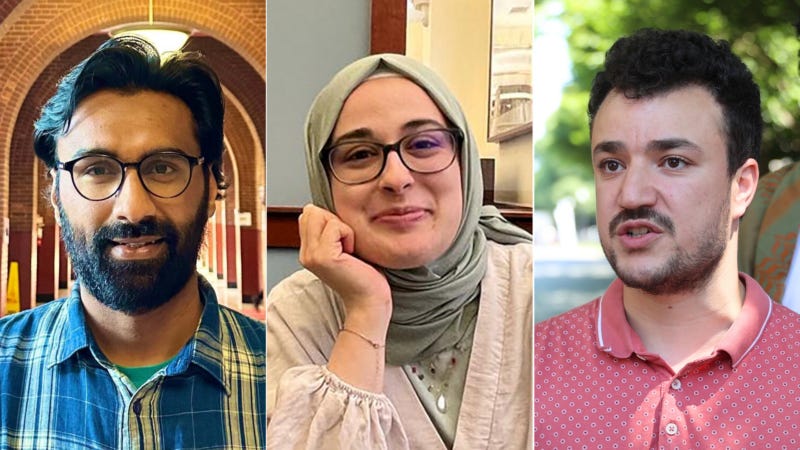
Academic organizations brought the suit on behalf of five students: Mahmoud Khalil, Rumeysa Ozturk, Mohsen Mahdawi, Badar Khan Suri, and Yunseo Chung. All were legally in the United States but were accused by federal officials of undermining U.S. foreign policy interests through their public positions and organizing.
The students were subjected to prolonged detention and attempts by authorities to deport them. Each ultimately prevailed in individual legal challenges, and those detained were released. However, the case focused less on the individual outcomes and more on whether federal policies had curbed free speech on campus more broadly.
Judge Young concluded that they had, writing in his opinion that President Trump and Secretary of State Marco Rubio had fostered a “climate of fear and repression.” He determined that statements and actions from top officials were designed to “strike fear” among those speaking out, particularly noncitizen students.
Now, the judge must determine how to address those constitutional violations. During the trial, he deferred ordering immediate remedies, instead asking both the government and the suing organizations to return to court to argue how he should intervene.
Legal experts say the next steps may prove more difficult than the initial ruling. Michael Kagan, a law professor and the director of the University of Nevada, Las Vegas Immigration Clinic, suggested the judge could focus on blocking continued use of the executive orders and Department of Homeland Security policies that enabled the arrests. But he noted that designing a remedy capable of preempting future tactics against noncitizen academics could be challenging.
“This is all pretty dicey territory for the court to navigate in terms of solving the problem,” Kagan said.
The organizations behind the lawsuit are urging the court to impose broad relief. They want an order that forbids the administration from using visa status or immigration enforcement as a tool to punish speech critical of Israel or supportive of Palestinian rights.
“The government’s unconstitutional actions have made many noncitizen students and faculty fearful of speaking out on issues that are important to them,” said Ramya Krishnan, a senior staff attorney at the Knight First Amendment Institute, which helped represent the academic groups. “We want the court to grant relief that addresses that fear, starting with an order that expressly prohibits the government from pursuing its policy of deporting people based on constitutionally protected speech.”
However, some legal scholars believe Judge Young may adopt a narrower remedy to avoid provoking a challenge on appeal that could undermine his landmark finding on First Amendment protections for noncitizens.
“One thing I could imagine is that the judge, having made that rather substantial departure from the norm, would get cautious at the remedy stage, and not purport to tell the government in too stark or precise terms what to do,” said Gregory P. Magarian, a law professor at Washington University in St. Louis.
The Trump administration has maintained throughout the case that the court lacks authority to interfere with foreign policy decisions or the enforcement discretion of federal agencies overseeing the conduct of visa holders. Government officials argued that remarks made by Trump and Rubio about foreign policy critics at American universities also constituted protected speech.
At Thursday’s hearing, Judge Young is also expected to consider arguments by media outlets, including The New York Times, to unseal documents presented at trial. The evidence in question includes internal communications between the State Department and Department of Homeland Security detailing how officials selected the student activists for arrest and removal proceedings.
Some information came to light during the trial, when government witnesses described using an anonymously run website, which publicized personal details about academics it labeled hostile to Israel, to help identify targets for investigation. Judge Young referred to additional evidence in his ruling, including official memos and dossiers, but those documents remain sealed.
During the trial phase, the judge provisionally agreed to keep some records private at the government’s request, citing concerns about revealing sensitive enforcement methods. However, because the sealed evidence contributed to his heavily scrutinized decision, news organizations are seeking access to those materials.
Judge Young’s ultimate decisions on remedies and court transparency will shape how federal policy can be used, or limited, in response to campus speech by international students, potentially setting further precedent on academic freedom and immigration enforcement.