

Evidence in Luigi Mangione Case Challenged Over Pennsylvania Arrest

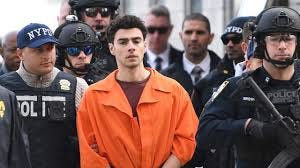
When two Altoona, Pennsylvania police officers responded to a call about a suspicious man inside a McDonald’s last December, they didn’t expect to stumble into the center of a high-profile murder case. But what happened during that arrest is now under a microscope and could determine the outcome of a major New York City prosecution.
Body camera footage recently shown in a Manhattan courtroom reveals that the Altoona officers did not read Luigi Mangione his Miranda rights until roughly 20 minutes after approaching him. During that time, prosecutors acknowledge, Mangione claimed he was homeless and gave a false name: Mark Rosario.
Prosecutors from the Manhattan District Attorney’s Office say Mangione is responsible for the fatal shooting of United Healthcare CEO Brian Thompson on a Manhattan street. They argue that Altoona police gathered evidence properly and that it directly connects Mangione to the murder. But defense attorneys contend the arrest was riddled with constitutional violations that should result in key evidence being thrown out.
The case has drawn national attention, and now Mangione’s defense is trying to suppress the statements and physical evidence obtained by the rural Pennsylvania officers, arguing they were the result of an illegal search and unlawful interrogation.
“All police officers have to follow the constitution and respect all of our individual constitutional rights,” said Anna Cominsky, a professor at New York Law School and director of its criminal defense clinic.
The defense has focused on two primary points of contention at suppression hearings in Manhattan: how Mangione was questioned, and how the contents of his backpack were obtained.
In court, Altoona Patrolman Joseph Detwiler admitted that when he got the initial radio call, he wasn’t convinced the tip was valid. “I did not think it was going to be the person they thought it was,” Detwiler testified. Still, Detwiler and other officers responded to the scene, where they encountered Mangione at the back of the McDonald’s.

According to body camera footage, Officers Christy Wasser and Stephen Fox placed Mangione in handcuffs and shortly afterward began searching his backpack. Inside they discovered a handgun, a loaded magazine wrapped in a pair of wet Hanes underwear, a silencer, electronics, a notebook, and a hand-drawn map of Pennsylvania and Ohio featuring the phrase “Keep momentum, FBI slower overnight.”
Also recovered was a to-do list. These materials are now central to the prosecution’s case, but the defense argues they were obtained through a warrantless and illegal search.
Mangione’s attorney, Karen Friedman Agnifilo, argued in court that officers rifled through the backpack without cause and later justified their actions by suggesting a potential bomb threat. The officers, Agnifilo said, never evacuated the McDonald’s or called in a bomb squad, actions she suggested would have been obvious if the concern had been genuine.
“Isn’t it true you were actually searching this backpack because you thought he was the NYC shooter?” Agnifilo asked Officer Wasser on the stand.
“No,” Wasser replied. “We search all people after arrest.”
Wasser defended the search by saying she wanted to be sure there wasn’t a bomb in the backpack. She also referenced not wanting to “pull a Moser,” a reference she explained was to another Altoona officer who had once unknowingly transported a bomb back to their station.
During the recorded search, when the officers discovered the magazine, Fox reacted by saying, “Damn dude. It’s f—ing him. 100%.” Later, when the search continued at the police station, Wasser reportedly exclaimed “awesome,” a statement Agnifilo questioned.
“I think it’s awesome and I was very proud of our department,” Wasser said during cross-examination.
The officers’ rationale for searching the backpack has become a legal battleground. Officer Fox argued in court that the search fell under the legal doctrine of “search incident to arrest,” which allows warrantless searches of a suspect’s belongings in certain circumstances.
The defense team disputes that rationale, calling the bomb justification a pretext.
“They certainly have a good faith argument,” said Gary Galperin, a former senior prosecutor in the Manhattan District Attorney’s office. He noted, however, that suppression motions are difficult to win. “The question for the prosecution, in the worst case scenario, if all the physical evidence is suppressed, is whether they have enough evidence to go forward.”
Beyond the physical evidence, Mangione’s early statements may also play a role. Though his false name and claim of homelessness are not central to proving he committed the murder, they could influence the case.
“Using a false name shows what we call a ‘consciousness of guilt,’” Galperin said. “Why are you trying to hide your real identity unless you are up to no good, basically.”
Despite the challenges, Galperin emphasized that not every misstep made during an arrest automatically renders evidence inadmissible.
“Not every single step has to be perfect,” he said. “The question is, did it overall comport with the law.”
The case has placed an unexpected spotlight on the small Altoona Police Department. Last year, the NYPD honored the officers and even made Patrolman Detwiler an honorary NYPD detective.
Now, a year after their arrest of Mangione, those same officers are facing intense scrutiny in a Manhattan courtroom. A ruling on the admissibility of the statements and evidence is pending from Judge Gregory Carro, a decision that could profoundly impact whether prosecutors can move forward with their case.