

Met Museum Workers Vote Overwhelmingly to Unionize

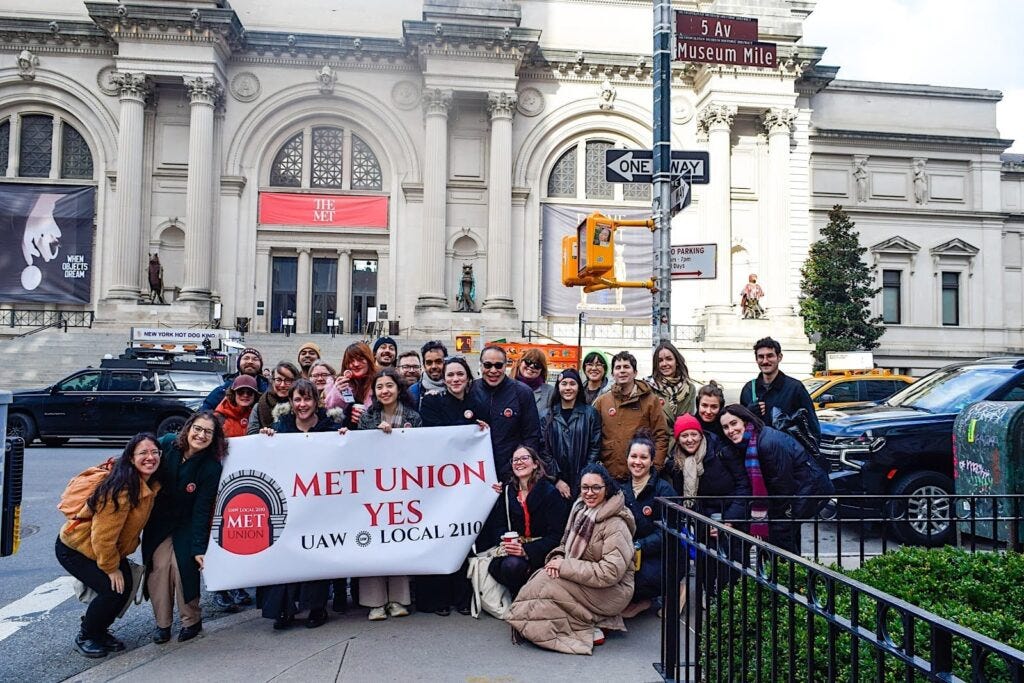
Hundreds of employees at the Metropolitan Museum of Art have voted to unionize, establishing one of the nation’s largest bargaining units within a cultural institution and setting the stage for negotiations over pay, job security and working conditions.
In a decisive outcome announced on Friday, workers voted 542 to 172 in favor of joining Local 2110 of the United Automobile Workers. The union, which has spent five years organizing quietly within the Met, will now represent staff from a wide range of departments including curatorial, conservation, education and retail.
“Our expertise and our labor have real value,” said Stephanie Post, a digital archivist with more than 30 years at the Met, in a statement released by Local 2110. “By unionizing, we aren’t just protecting our jobs, we are building a collective voice to ensure every staff member, now and in the future, gets the respect and protection they deserve.”
The final size of the bargaining unit is still being determined. Museum officials have challenged the eligibility of over 100 employees, but the union stated the group could ultimately include nearly 900 people, about half of the museum’s 2,000-person workforce.
The newly unionized workers join others at the museum who are already represented by separate unions, including those in security roles. Local 2110 itself now represents employees at over a dozen museums and cultural institutions across New York City, including the Brooklyn Museum, Guggenheim Museum, New Museum, Jewish Museum, Whitney Museum and the Museum of Modern Art.
“As one of the world’s leading art museums, the Met has long been committed to supporting its exceptional staff with highly competitive salaries and benefit packages that surpass industry standards,” said Ann Bailis, a spokesperson for the museum, in a statement following the vote.
According to the museum, more than 600 Met employees currently earn over $100,000 annually. Salaries have increased by an average of 4 percent each year over the past five years.
In the lead-up to the vote, support for unionization grew internally. A group of employees circulated a letter that later appeared on social media, voicing frustration over job demands and workplace conditions. “We hear praise for our work at staff meetings, but we feel the daily strain of huge workloads,” said the letter. “We hear apologies for the toll taken on us, but without collective bargaining, our power over our own working conditions is illusory.”
The vote represents a major win for Local 2110, which has been a central force behind a rising wave of labor organizing in the arts sector across New York. With this vote, employees of one of the world’s most prestigious museums have joined a growing movement of cultural workers seeking a stronger voice in their institutions.