

New York City Retires MetroCard After Three Decades of Service

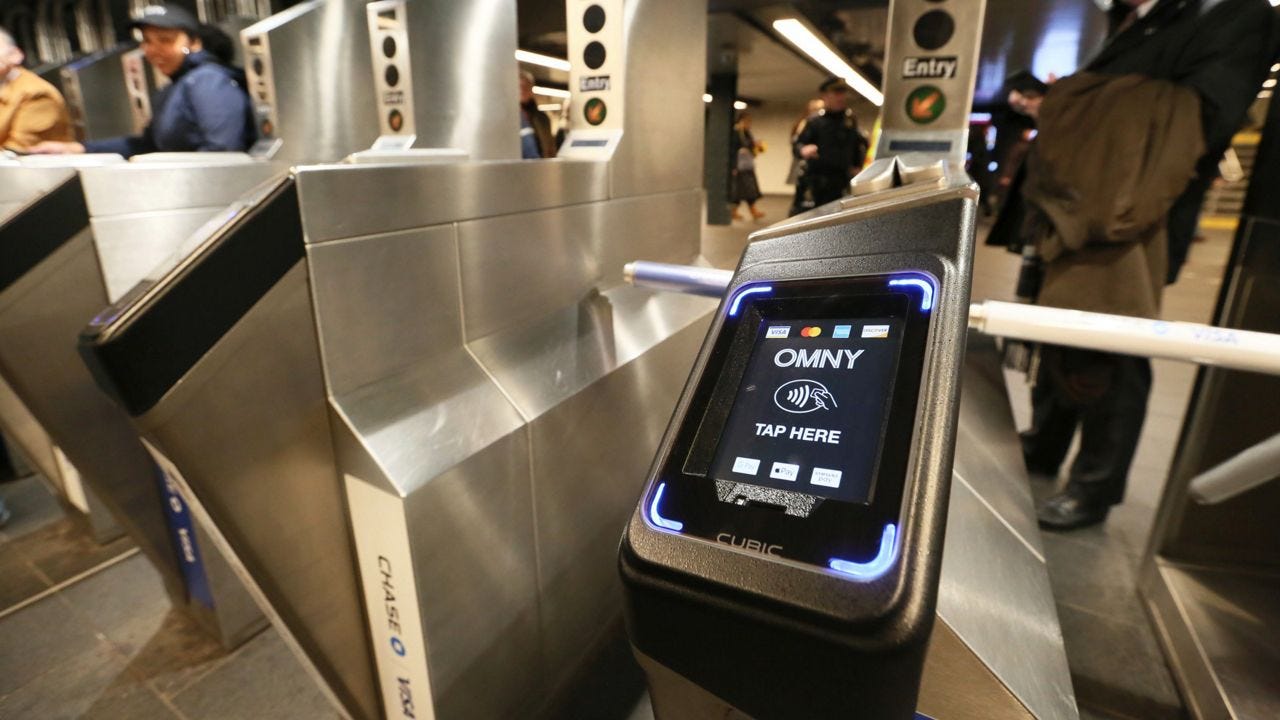
The MetroCard, once hailed as a modern leap forward in New York City's subway system, will officially stop being sold or refilled after December 31, 2025, marking the end of an era for millions of daily commuters as the MTA completes its transition to the tap-and-go OMNY fare system.
Introduced in 1994, the MetroCard replaced the brass-colored subway token that had been in use since 1953. The plastic card, with its magnetic strip and signature gold-and-blue color scheme, gradually became central to New York life, both utilitarian and iconic. Now, over 30 years later, the card is being phased out as more than 90% of subway and bus rides are made using OMNY, a contactless system that lets commuters pay with a credit card, smartphone, or reloadable OMNY card.
"When the MetroCard replaced the New York City subway token in 1994, the swipeable plastic card infused much-needed modernity into one of the world's oldest and largest transit systems," said the Associated Press.
The introduction of the MetroCard was not without its challenges. Jodi Shapiro, curator at the New York Transit Museum in Brooklyn, reflected on the early days of the card. "There was a resistance to change from tokens to something else because tokens work," she said. “MetroCards introduced a whole other level of thinking for New Yorkers.”
The New York Transit Museum, housed in a decommissioned subway station, opened an exhibit earlier this month reflecting on the MetroCard’s legacy. The card initially appeared in blue before adopting its more familiar gold design and went on to become a collector's item, with the MTA issuing special editions to mark significant moments. These included limited-edition cards celebrating the 2000 World Series “Subway Series” between the New York Yankees and the New York Mets, as well as designs featuring artists like David Bowie, Olivia Rodrigo, the Wu-Tang Clan, the Notorious B.I.G., LL Cool J, and even TV shows like “Seinfeld” and “Law & Order.”
Lev Radin, a MetroCard collector in the Bronx, said, “For me, the most special cards are cards which present New York City to the world. Not only photos of landmarks, skylines, but also about people who live and make New York special.”
MetroCards had a learning curve, and over time, the correct angle and speed of the swipe became second nature to regular commuters, often distinguishing seasoned locals from first-time tourists. Public campaigns were launched to show riders the proper way to swipe, and the MTA even briefly considered introducing a mascot called the Cardvaark.
"Its notoriously finicky magnetic strip" became part of New York's daily rhythm, and even public figures found themselves humbled by it. During her 2016 presidential campaign, former U.S. Senator Hillary Clinton required five attempts to swipe through a Bronx turnstile. At the time, her opponent, Senator Bernie Sanders of Vermont, reportedly seemed unaware that tokens had been discontinued.
Still, the OMNY transition has been smoother than the switch from tokens to MetroCards. OMNY was introduced in 2019 and has grown steadily in usage over the years. For those concerned about using credit cards or smartphones, the MTA introduced a reusable OMNY card that functions similarly to the MetroCard. MetroCards with existing balances will also continue to work into 2026.
A major factor behind the change has been cost savings. The Metropolitan Transportation Authority says the switch to OMNY will save at least $20 million annually due to reduced MetroCard-related expenses.
OMNY also introduces new fare structures. Starting in January, when the fare increases to $3, the system will cap rides at $35 per week. Once a rider hits 12 rides in a seven-day period, any additional rides during that period will be free.
While the advanced technology may be convenient for most, not everyone is ready to say goodbye to the old system.
"It's hard for the elders," said Ronald Minor, 70, of Manhattan, who was still swiping his MetroCard near Times Square. “Don't push us aside and make it like we don't count. You push these machines away, you push us away.” Though Minor owns an OMNY card, he said he found the process to reload it more cumbersome than the MetroCard system.
At the Port Authority station, John Sacchetti expressed a more neutral view. "It's just like everything else, just something to get used to," he said. "Once I get used to it, I think it'll be okay."
He also pointed out a feature he’ll miss: the ability to check his balance with each swipe. “I like being able to see my balance as I go through,” he said.
Despite lingering nostalgia and challenges for some groups of New Yorkers, the MetroCard will soon join the subway token as a relic of transit history. As Shapiro noted, the card marked a major shift in the way New Yorkers moved through their city—and now OMNY is doing the same in a new era.